
when to ai
Weekly AI Memo #17

“I Am Not a Robot” is the title of a new book by Joanna Stern. This week I listened to her interview promoting the book on Alex Kantrowitz’s Big Technology podcast. The book is about her using AI religiously for a full year. She journaled the whole thing and turned it into the book.
I haven’t read it, but it inspired this memo. Not about how much I use AI, which is a lot. But about what I’ve actually learned from using it this much. The honest answer is that the biggest skill I’ve picked up isn’t prompting or building or any specific tool. It’s taste for when to turn to AI and when not to. When it’ll get something done faster than I could on my own, and when it’ll just add steps. Most of the value is in that judgment.
Here’s where I’ve landed, after trying it on basically everything.
Writing is the easiest call. I always rough draft what I want to say first, then drop it into AI to check for clarity and tone. Typos, missed words, grammar. I use this for cold outreach, for proposal language, for this memo. I never ask AI to write for me. I write it first and ask for improvements. If I’m stuck, I’ll ask for ideas, but I still draft it myself. The reason is simple. If I let AI write first, the final product sounds like AI. If I write first and let AI polish, it still sounds like me. The order matters more than the tool. Most importantly, writing forces critical thinking, which isn’t a habit humans can afford to lose.
The Office extensions take the annoying parts off my plate. I use the PowerPoint extension a lot for proposal building. I write the context, points, and copy, and the AI handles the aesthetic. Colors, font sizes, headers. Same with Excel. When I can’t remember a formula or some function I haven’t used in a while, I just describe what I want in plain English.
The custom stuff I’ve built inside Claude is where the leverage is. Prospecting is the biggest one. I have a lead qualification skill, and sometimes I’ll give it a new media opportunity or sponsorship I’m working on and ask it to find potential candidates. Reporting is another. I have a Claude project that takes anonymized Excel files I drop in and spits out a templated PowerPoint with clean charts. Meeting prep is a third. I drop in a URL of the company, backslash the skill, and it does the heavy lifting. The thing these have in common is they’re tasks I do over and over. The upfront setup pays back every time I use them. For a one-time task, I wouldn’t build a skill. I’d just do the task. If you find yourself doing the same thing week after week, that’s the signal to build a skill for it.
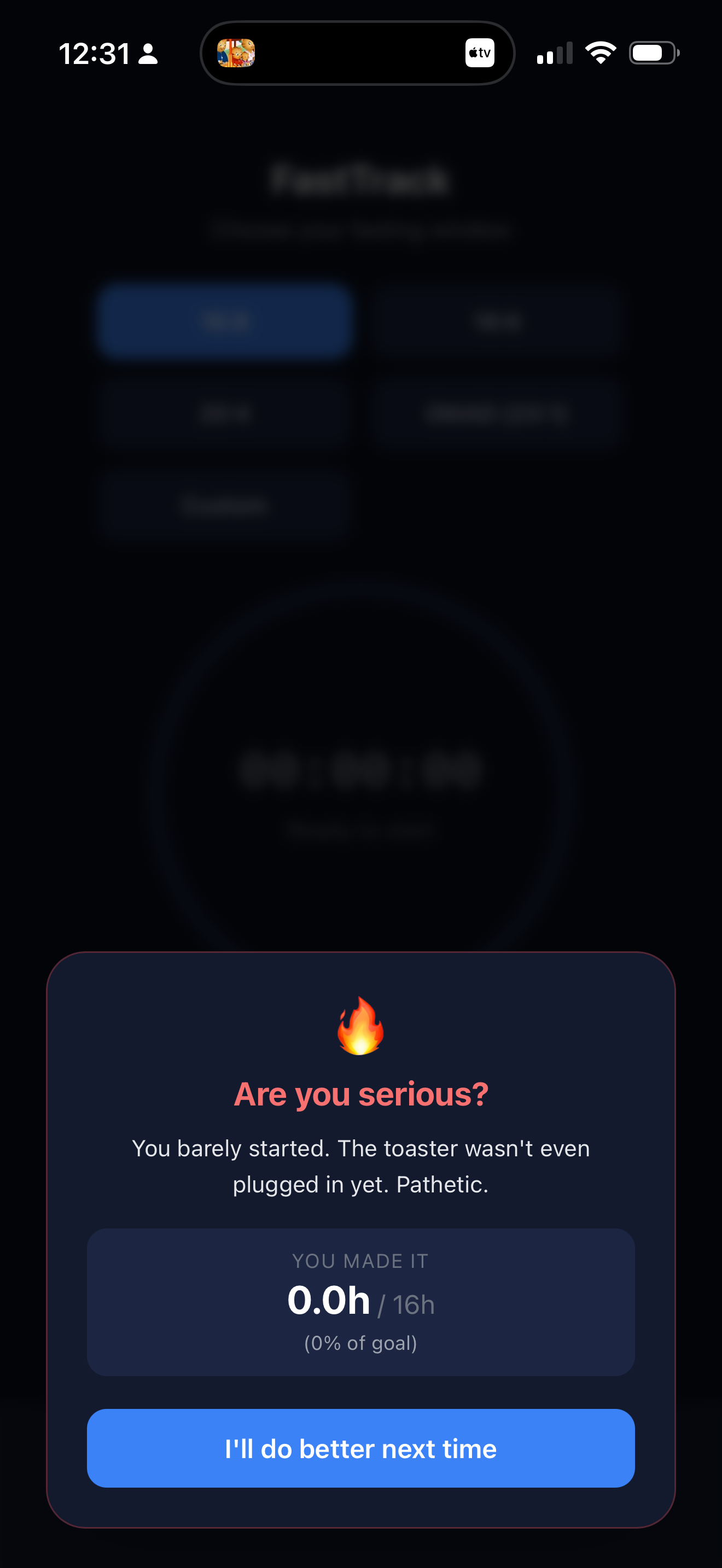
Then there are the things I built with Claude Code. I’m not a developer. A year ago I couldn’t have shipped any of this. Now I can describe what I want and Claude Code writes the code. Two apps I use every day as a result. One is a fast tracker (for tracking my 16:8 fasts) that insults me if I break fast too early - see screenshot below. The other is a workout logger, because logging workouts in a spreadsheet at the gym is annoying. I tap the exercise, weight, sets, and reps, and it routes everything to a Google Sheet. I also built an automation that pushes this newsletter to social every week. The draft comes to me on Telegram for approval, then it goes live. And I used Claude Code to launch my wife’s new business website, mosaicsportsmediagroup.com.
The personal layer is the part that sneaks up on you. I have Claude connected to my Gmail, and at the end of the week I ask it to pull the big AI headlines from newsletters I’m subscribed to. I keep a running tab of notes and ideas. I ask it for parenting tips. Help with my crazy dog. 3D CAD models. None of this feels like “using AI.” But I always have a place to turn for how to do something and a second opinion.
AI computer use is still not great, so I don’t bother with it. Anything that requires me to babysit the AI to make sure it doesn’t go off the rails is usually slower than doing it myself.
What I didn’t see coming a year ago is that the most useful thing I’d learn from all this isn’t a tool. It’s the instinct for when to reach.
Term of the Week: Hybrid AI
Most AI today runs in the cloud. The push lately is toward local AI, meaning models that run directly on your device. Hybrid is when the two work together, with the system deciding in real time which to use for what. Heavy reasoning goes to the cloud, simple stuff stays on your device. The result is faster responses, better privacy, and less dependence on a connection. Apple Intelligence is the example most people will recognize. You’ll start hearing this term more.
Let me know what you think. If you find this useful, please share.
Joanna Stern interview on Big Technology: https://pod.link/1522960417/episode/ZTcwNDZmNGMtNDQzMC0xMWYxLWFjMGMtODc4ZDE5MWZkN2Yz?view=apps&sort=popularity